
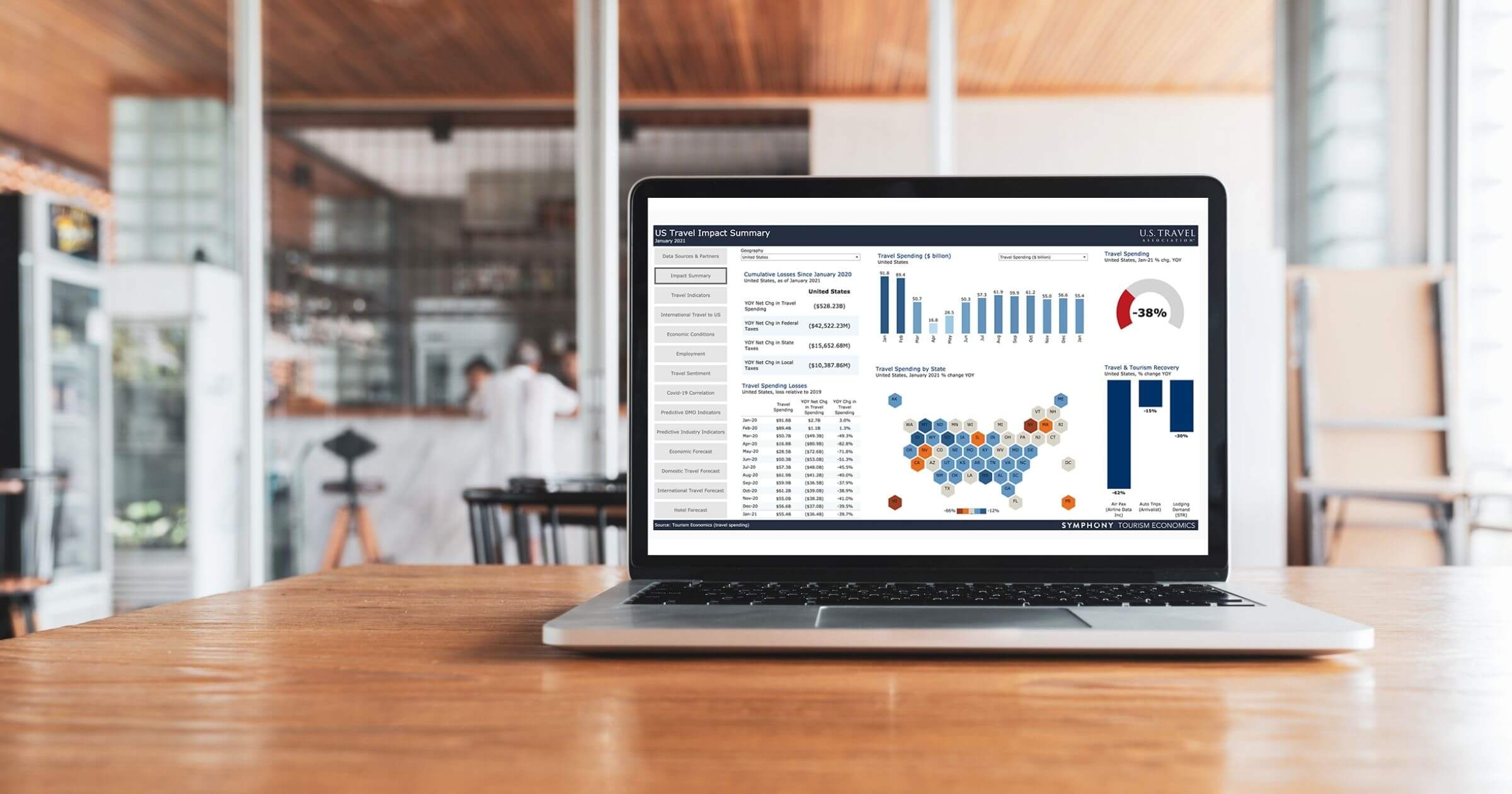
November travel data shows the U.S. government shutdown negatively affected travel during the month, with multiple indicators posting their lowest levels of the year. Overall travel spending fell 1.8% year over year in November.
Despite stronger volumes around Thanksgiving, several key indicators declined for the month:
- Domestic air trips were down 0.7%.
- Hotel room demand declined 2.1%, the steepest drop since the pandemic.
- National park visits fell 6.2% compared with last year and have now declined for ten consecutive months, reflecting the impacts of shutdown-related closures, reduced staffing and potential disruptions to data collection.
Inbound overseas travel declined 3.5% in November, consistent with trends observed throughout the second half of 2025. Travel from Canada and Mexico also aligned with recent patterns: up by double digits for Mexico, and down by double digits from Canada.
Continued declines in international visitation have contributed to a widening gap between travel imports and exports: the net travel trade deficit expanded to more than $6 billion in September (the most recent month available).
Some economic data remained delayed due to the shutdown, but available consumer indicators were mostly stable in November:
- Inflation and labor market conditions remained steady.
- Consumer sentiment indicators remained at low levels, and inflation concerns persist.
- Interest in travel continues to remain high despite broader economic uncertainty.
For more information, visit ustravel.org.
